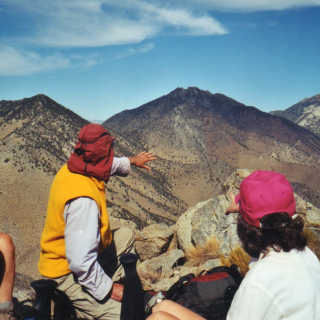
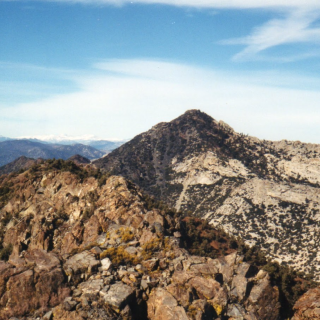
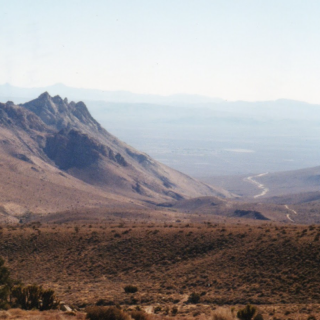
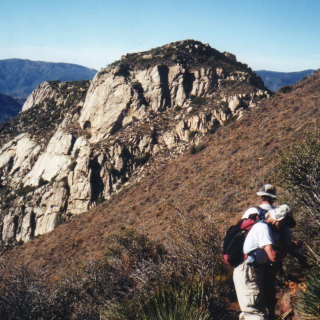
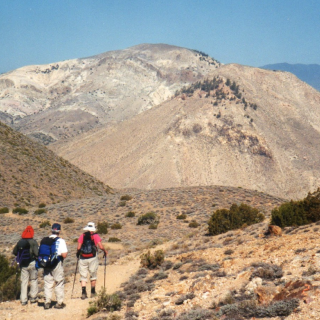
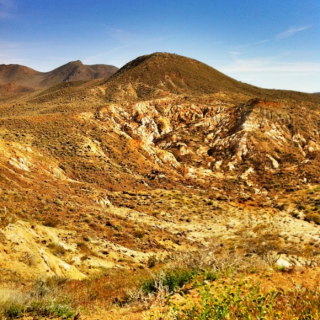
This HPS use-name is borrowed from USGS bench mark 5033′ designated “Fox” by surveyor Paul Nelson in reference to nearby Fox Creek northwest of this peak. The Tujunga “Little Lander’s” Historical Society believes the creek was named after the animal and not any individual.
“Fox” is an infrequently used place-name in California; USFS Cultural Resource Manager Steve Horn believes that this is so because “the fox is just too smart to let himself be seen very often”. The native Gray Fox (Urocyon cinereoargenteus) has a 21″-29″ long body and weighs 7-13 lb. It has a salt and pepper colored coat, a white neck with red undercoat, a long bushy black-tipped tail, and a median black stripe down its total length. It’s omnivorous, primarily nocturnal and is the only American canine with climbing ability. It has been known to live for 10 years in captivity, has a range of 50 miles and can muster 28 mph for short distances. It is still found in most of our local mountains and foothills, and its fame is widespread in myth and fable. For example, æsop relates 21 moral stories based on foxes. The fox is a nearly universal symbol for a seeker of wisdom and knowledge, and is connected with European myths of lycanthropy (woman to fox), as well as Asian shape-shifting (fox into woman). In slang, to be “foxy” is synonymous with being “crafty”. In the original sense this alludes to the purported guile and trickery (especially the shape-changing capacities) of those adept at witchcraft. The fox was once a common symbol of the Christian Devil, representing the base attitudes and wiles of “the adversary”. in western North American mythology, the fox is a male animal character who plays a fairly prominent role in fables of “the trickster”. “Fox” or “cunning fellow” in Spanish is “Zorro”, used as the name for the fictional Robin Hood type character in the picturesque romance: The Mark of Zorro 1920) by Johnson McCully.
Peak was not named for Hollywood studio chief William Fox (1879-1952).
The creek is first cited on USGS Tujunga topo (1905). The bench mark designation first appears on USGS Condor Peak topo (1959).